Conflict Minerals: How Ethical are Video Games?

If you’re looking for my usual light headed, more humorous writing style this week then sadly, this isn’t your week. The topic I’m bring forward today is a very serious one. The fighting in The Democratic Republic of Congo is very real and still goes on to this day, some 25 years on, in some of the deadliest fighting since World War 2. With some estimating more than 4.5 million people being killed in the conflict so far.

The idea for this post came from an episode of Extra Credit I was watching whilst playing Command & Conquer for it’s review. I had never really given much thought as to where my consoles have come from other than “From a factory somewhere”. Obviously the minerals required for the components that make them have to come from somewhere, so stay with me as we pull back the curtain on the shadier side of the gaming industry.

Conflict minerals are raw materials that have been gathered from within conflict zones to which the profits of the sale of these materials are used to perpetuate the fighting. They are similar to blood diamonds which is a much more well known phenomenon. The 4 most common conflict materials are Gold ore, Cassiterite (an ore of Tin), Wolframite (an ore of Tungsten) & Coltan (an ore of Tantalum); However, conflict minerals are not exclusive to these minerals. The problem of conflict minerals and the mining of them is huge in the Democratic Republic of Congo, where there is estimated to be untapped mineral deposits valued in excess of $24 trillion ($24,000,000,000,000). The mines themselves are usually family or village run operations but rebel groups, private militia, terrorist cells and armed forces profit from the theft, illegal taxing and smuggling of these minerals. These bands will either take complete control of a mining operation or demand a cut. If the miners refuse these forces have been know to decimate entire villages, kidnaped children as slaves or child soldiers and use rape as a weapon of war.

This is a huge problem for both the games industry and the electronics industry as a whole since a lot of the minerals stated are used in the manufacture of electrical components, which in turn is used in all our electronic devices. Gold is used in the coating of wiring, Tin is the main component in solder, Tungsten is used to create vibrations and Tantalum is used to allow a device to hold a charge. Fortunately enough this is a situation that is starting to be addressed. Both the US and EU have put into law the investigation of supply chains and forcing companies to disclose whether or not conflict minerals are being used in their products. These laws are been embraced and real effort is being made by the industry to audit their supply chains in order to weed out conflict materials. Intel was one of the first to embrace the move away from conflict minerals and has been free from conflict materials for the past 6 years. Both Sony and Microsoft have also made positive steps in eliminating conflict materials in their supply chain, both going so far as to specifically name every one of their smelters or refineries (SORs) in their public audit reports in efforts to show that their resources are conflict free. Apple too confirmed that in 2015 all 242 of the SORs they purchased from were conflict free and have done so every year since, in fact the following year they stopped business with 10 of these SORs because they didn’t participate in the audit.

Now the elephant in the room, you may or may not noticed that I have yet to name drop Nintendo into this discussion. Back in 2012 when the first conflict minerals company rankings were compiled from a report put together by the Enough Project as part of the Raise Hope for Congo campaign. Nintendo finished dead last with a score of 0, stating that.

“Despite growing public awareness about this issue and significant industry movement, Nintendo has made no known effort to trace or audit its supply chain,”

Sasha Lezhnev and Alex Hellmuth August 2012

This isn’t to say that Nintendo actively used conflict materials, it just shows that they didn’t prove they didn’t use them. It’s more likely that they were burying their heads in the sand from the problem. This however does nothing to ease the minds of the public and Nintendo’s fan base. It makes the company look more guilty than it probably is which in turn causes doubt and worry in those who are loyal fans of the company, especially in todays ethical driven society.

In fairness thought this was 8 years ago and improvements have been made by Nintendo since then, be it minimal. In it’s most recent report (August 2019). Nintendo stated that out of the 323 SORs that sources Tungsten, Tin, Tantalum & Gold (3TGs) it got responses from every single one, however only 256 (79%) were identified as meeting an industrial standard in regards to auditing and ethical sourcing. It is true to say that Nintendo has been improving (they were up from 76% last year, 74% the year before that) but when you consider that Nintendo has had the same amount of time to address the problem as the rest of the world but is still dragging it’s heels, it’s not exactly a great improvement. It feels like the attitude Nintendo is taking is one of doing no more than they have to. A great example of this is that the majority of companies higher up the ranking (Apple & Microsoft to name but a few) actively contribute money and resources to efforts to eliminate conflict 3TGs from the supply chain and provide funds to audit SORs as to their ethical resource sourcing . Nintendo on the other hand does nothing of the sort, it seems their contribution to the eliminating the problem is to show how they are not giving to the conflict and if you ask me that’s morally ambiguous at best. This behaviour however, doesn’t prove that Nintendo have blood on their hands, but they are hiding them so well that they are unable to prove that they don’t.

I’ve mentioned what the industry has done to root out the problem but what can we do as consumers? One thing we can do is to look at more than the financial cost of a device or console. Look at it this way, if one company releases a laptop of specific specs and another less reputable company releases another laptop of the same specs at the fraction of the price, ask yourself where that extra money is going. Is it going toward a higher quality product or maybe is it going towards more ethical resourcing and manufacturing? Sometimes you may be paying less financially but there might be an ethical price to your cheaper tech. That’s not to say all cheap products fuel conflict, just that we should be more aware of the products we buy and the companies that make these products or the ones that sell them to us. If we change our spending habits, look into making more ethical choices in our purchases we can be a driving force for the industry and force change in those companies unwilling to improve ethically, because the best way at fighting unethical companies is to hit them where it hurts, their bottom line.
BONUS CONTENT: Game of the Year 2016

There wasn’t really many good games released in 2016 was there? There were no Witcher 3’s or Skyrims this year, but I suppose anyone that has a modicum of deductive power can make an educated guess as to what my game of the year is going to be by looking at the list of nominees. Speaking of nominees, here they come now.

2016:

Nominees:

  • Final Fantasy XV
  • Firewatch
  • Persona 5
  • Stardew Valley
  • XCOM 2

Winner:

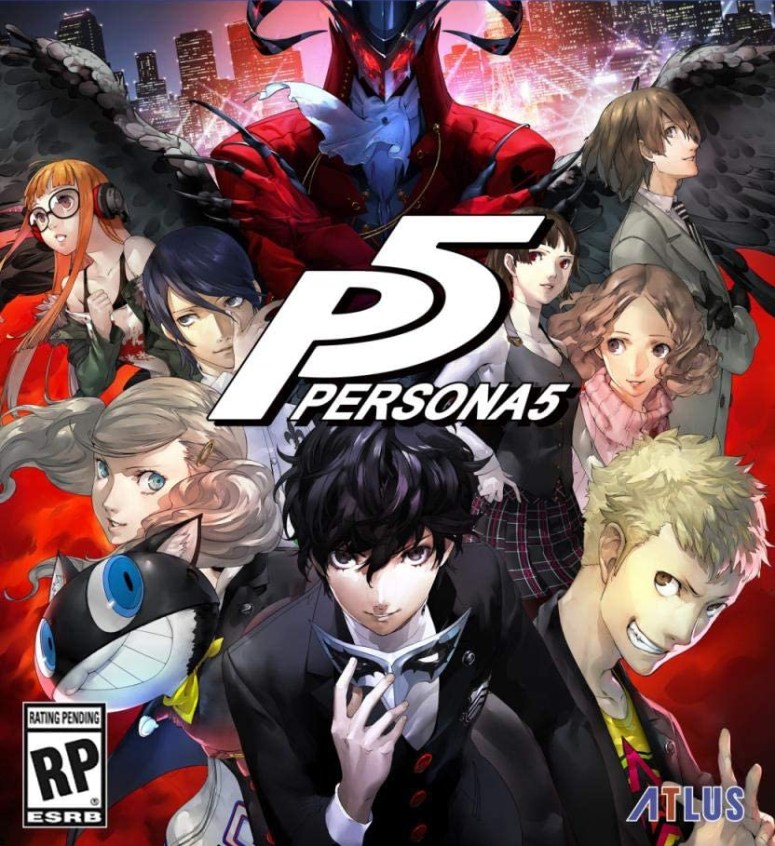
Persona 5

I’m assuming you all guessed correctly (If you didn’t I’m hoping for a better effort next week). In my review of Persona 5 I did mention that the game was not perfect but the good things the game does do are done extremely well, the soundtrack is catchy and really fits with the games aesthetics. The story of social injustice and political corruption is one a lot of people can relate to given current world affairs. The characters were also deep and relatable. Given that I only picked it up on a whim I was very pleasantly surprised by it. So there you have it, Persona 5, Game of the Year 2016.

XCOM: Chimera Squad (PC)

This was a game that I didn’t know even existed until A few months ago. If you’d like to cast your minds back to my XCOM: Enemy Unknown Review you’ll know that I found it to be an excellent play with a difficulty curve that resembles a brick wall if you don’t know what your doing. XCOM 2 I also enjoyed despite the fact that it was nearly a copy-paste of the original, warts and all. So lets see if lightning can strike not just twice but three times.

XCOM Chimera Squad takes place 5 years after the end of XCOM 2, where ADVENT (the alien-led government of Earth) has been overthrown and left earth. Taking place in the fictional city of City 31 (after writing that I asked myself if I could come up with a better city name, it took me 6 seconds to come up with the name “Cohort”) where humans, aliens and hybrids live together. You play as XCOM’s new Chimera Squad, a multi-species peace keeping special task force tasked with keeping the peace of City 31 and bringing down organised crime within the region.

I’ve heard it mentioned that the game feels like an XCOM Saturday morning children’s TV show and I have to say that it’s a very apt description, the game feels very safe like it’s trying too hard to appeal to the lowest common denominator. Instead of being able to recruit randomly generated recruits whenever you can afford them, the game has a handful of personalised characters air lifted from whatever B-list kids TV shows they could get their hands on. This means that there’s no permadeath, so if a squad member is downed in battle they get a attribute penalty until they spend a couple of days in training to put themselves to rights. The battle sequences too feel a lot like “Baby’s First XCOM”, they are split into several smaller battles with breach sequences between them, allowing you the opportunity to take out a few enemies before the battle begins in earnest. Both of these changes flatten the difficulty curb with a bulldozer. Although saying that, I had to change my normal XCOM approach in this game because the developers have done away with both the sniper and the demo classes. Given all the above I found myself getting quite bored, quite quickly.

It wouldn’t be much of an XCOM game without our base and in true XCOM style we have our base but in true Chimera Squad style that has also been simplified. All rooms are available from the word “GO”, all you have to do is assign people to rooms in order to utilise them. This was a problem at the start of the game, since I only had 1 team member spare I would have to halt my R&D when a squad member needed healing. Deployment is similar to the previous XCOMs but instead of countries you deploy in city districts, each district having it’s own unrest meter. If a district fills it’s unrest meter, the city anarchy meter will start filling, when that meter is full the game is lost.

Another thing that really annoyed me were the alien members of the team, they felt far too human, some of them felt more human than some of the human characters. There wasn’t any kind of a culture clash within the team. Again going back to the kids tv show analogy, they felt like the arbitrary alien sidekick who’s only reason for existing is because it scored well with the 7 to 11 year old demographic. The whole nicey-nicey feel good frictionless vibe within the squad feels artificial and staged which rubs me up the wrong way.

Overall the game feels like someone had the great idea of a SWAT-esque XCOM game (XCOPs if you will) but then marketing got their hands on it and thought it would sell better if they diluted the game to appeal to the 7-11 age range; However, In doing this they have removed the appeal of the core demographic of the series since there isn’t really any kids TV shows that appeal to adult gamers, with the exception of Ducktales.

BONUS CONTENT: Game of the Year 2015

This one was another difficult choice, turns out I’ve played even less guess this year then I did the last, the only other game I played from that year was Just Cause 3. So with that in mind lets move on to the nominees.

2015:

Nominees:

  • Fallout 4
  • Life is Strange
  • Metal Gear Solid 5: The Phantom Pain
  • Rise of the Tomb Raider
  • The Witcher 3: Wild Hunt

Winner:

The Witcher 3: Wild Hunt

Looking at the list of games on Google from 2015 I don’t think there was another game that year that could have gotten the award. I’ve got a review “oven ready” for The Witcher 3 sitting in my drafts waiting for the right moment to release it, but in short. The world is rich and vibrant, The story is engaging and invigorating and The gameplay is crisp and user friendly. It is a fantastic game and a must own for any RPG lover also don’t be discouraged if you haven’t played the first two games. There is plenty of lore to get your teeth into to get you up to speed.

Vigil: The Longest Night (PC, SWITCH)

Before we begin I’d like to thank the guys over at Another Indie for sent me a copy of the game to do this review for them. It’s the first game I’ve been sent to review, which makes me feel more like a professional than a hobbyist, so to me it’s quite a big deal. In return for their generosity I’m promising myself not to fuck this up. So, here goes.

Vigil tells the story of Leila, a more than capable Vigilant warrior. Who upon arriving back in her home village of Maye after years away discovers her sister to be missing and as such sets off to find her. Whilst there Leila discovers that all is not right at home. Shadowy figures appear and terrible happenings occur to which Leila must get to the bottom of in hopes that it will reunite her with her sister.

One thing I would recommend is if you are playing it on PC like I did, use a controller. The game feels like it wasn’t designed to be played using a keyboard, I felt like I was all fingers and thumbs a lot of the time, especially when trying to access my equipment or levelling up. After a while I managed to get to grips with it but I did have to change the dodge button because I found my game would minimize when continually mashing it with Windows asking me if I wanted to turn on ‘Sticky Keys’ which got quite frustrating, especially during boss fights.

There are 2 major niggles I have about the game that I found hard to overcome. The first of them is the map, I look at the map and the term, “Cluster Fuck” comes to mind. Speaking of cluster fucks this brings me to my second niggle, the story telling. I felt like a lot of the story was lost beneath a bombardment of text boxes. I get where the team were going with this, flesh out the world with lots of decryption in a Dark Souls-ish way but I don’t know if it’s a problem with me or not but I don’t think Dark Souls games tell a good story and Vigil suffers in the same way. Both games do a great job at crafting and defining the world in which the games are set but I did spend most of the game wondering around the map wondering why I was doing any of it.

Now lets get into what the game does well, first of I really enjoyed the art style, it resembles Briad if it were made by Tim Burton, both beautiful and grotesque in equal measures. I thought the animation of Leila was quite fluid but the enemies in comparison seemed a little clunky at times which impacted my ability to get immersed into the experience. I compared the game to Dark Souls earlier and in a true Dark Souls-esque manor, I died and I did so a lot. When quick loading it never took very long to get back into the game which is a positive but especially with the first boss I found the nearest save point was quite a ways from the boss fight itself meaning I had to needlessly repeat the same section over and over again. Having save points closer to the boss fights would be a huge improvement in my belief.

Overall if felt like I experienced a game of two extremes. The visuals and the attention to detail on the graphic art are brilliant but then on the other hand the story was so confusing and poorly told it might as well have not existed. It’s all shirt, no pants; Just like Winnie the Pooh. However; Despite all the negative points I’ve made the game is engaging and made me want to play on. It’s nowhere near a perfect game but it’s still an experience worth having if you enjoy a darker gaming experience. Well done to the teams at Glass Heart Games and Another Indie for a job well done and I wait eagerly for your future endeavours.

BONUS CONTENT: Game of the Year 2014

This one was a difficult choice, I hadn’t played many games from this year, let alone many that I thought were worth of being named Game of the Year, but luckily enough I only needed to pick one to win the award and the rest will be arbitrary. In the end I managed to weed one out of the pile, that and the other nominees are as follows.

2014:

Nominees:

  • Destiny
  • Infamous: Second Son
  • Middle-Earth: Shadow of Mordor
  • This War of Mine
  • Watchdogs

Winner:

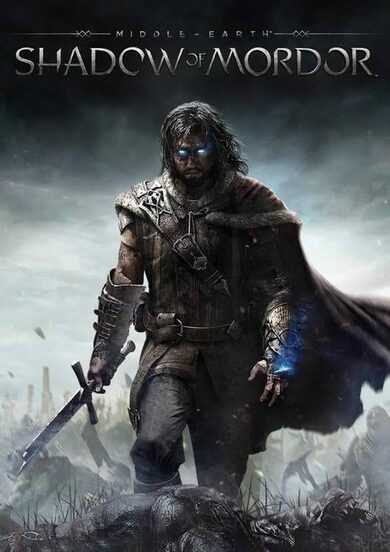
Middle-Earth: Shadow of Mordor

I don’t know if this is cheating or not but I actually didn’t play Shadow of Mordor until a few years after it’s release (2018 if my memory serves me right) but it was initially released in 2014 so it fits and I’m allowing it. Some of my favourite games are ones with a great story that is told well, Shadow of Mordor was an exception. I found the story to be average at best, but the gameplay was more than enough for me to forgive it. I thought the combat was fluid and engaging, the environments were well crafted and the nemesis system was nothing short of fun. I spent far too much time trying to gain a monopoly on Orc officers, and to be honest I enjoyed almost every moment. I came away from the experience thoroughly enjoying it which is more than I can say for most of the other games on the list.

Command and Conquer Remastered (PC)

What is it with the sheer number of remakes that are coming out this year? I’ve so far yet to play a game released this year that wasn’t a remake or a remastering with the exception of Fall Guys (and anyone who’s read my review on it will know my feelings about it) and Endzone. So here’s another one to throw onto the pile. Command and Conquer Remastered gives us a revamped version of the first 2 games in the series (Command and Conquer, and Command and Conquer: Red Alert).

Anyone who hasn’t heard of Command and Conquer obviously never played video games in the mid to late 90’s. So for those of you who were too young to remember or didn’t care for them at the time let me catch you up. Command and Conquer is a military strategy game set in an alternate history where in the early 90’s a meteor crashes near the Tiber river in Italy, on that meteorite was a substance called Tiberium (named after the crash site) which absorbed and crystallised precious metals from the surrounding soil, but in doing so terraforms the immediate area making it lethal to anyone unprotected. The coming of the meteorite was predicted by the mysterious, messianic leader of the cult The Brotherhood of Nod (Nod for short) known only as Kane, who’s followers proceed to harvest the crystals to fund the cult. By 1995 Tiberium has spread all across the planet and Nod forces control about half the worlds supply and through it’s sale amassed a global army. This rapid growth and power grab causes the UN to establish the Global Defence Initiative (GDI), a global military tasked with controlling the spread of Tiberium and to oppose the actions of Nod. Red Alert takes place in an alternate alternate history when experimenting at the Trinity site, New Mexico in 1946, Albert Einstein manages to successfully travel backwards through spacetime, arriving at Landsberg Prison, Germany in 1922 where a young Adolf Hitler was just release from prison. Einstein erases Hitler from the time line and returns to 1946. This causes the growth of the Soviet Union to go unchecked leading to global conflict with the allied forces of western Europe.

Both of these games were solid staples of my early video gaming life. I spoke briefly in my Dynasty Warriors post that I used to really enjoy linking our 2 Playstations together and playing Red Alert co-op. I also remember going to my friends house some times afterschool where we would play 1 of 3 games, Final Fantasy VII, Resident Evil and Command & Conquer. So it’s safe to say that there is a fair amount of nostalgia floating about when I write this review.

On the subject of nostalgia, that seems to be the games biggest selling point given that they are exactly the same games with optional graphic upgrades as pressing the space bar switches between original and remastered graphics; However, I can’t imagine why you’d want to keep playing the game set on the original graphics since it just looks like coloured squares making other coloured squares explode into bits of coloured squares. The remastered graphics certainly make the game playable in a modern era but they are hardly anything special. Gameplay wise there is no difference what so ever, given that both games were remade using the same engine as the originals it’s easy to understand why this is. There are also a tonne of bonus unlockables for completing each mission, such as behind the scenes footage or bonus art work. I can imagine that this is mainly for the hard-core fan and that most players will give a miss. The music is the biggest improvement for me. All tracks from both games have been re-recorded by Frank Klepacki (the original composer) and the fan band The Tiberium Sons, as well as some songs from later games and some that were cut or lost from the original games.

I’m not sure what I was expecting from these games when I first heard about the Remastering. I went into the game hoping for the same feelings of nostalgia I got when I originally played them all those years ago, sadly however it just wasn’t there. As much as it upsets me to say it, the years have not been kind to the original games and sadly they just don’t hold up to modern military strategy games. They feel a bit basic and simplistic. In writing this review it’s come to me that I preferred Red Alert 2 to the original games. The story campaign was much better, it was far superior graphically and the gameplay was much more varied with a larger array of units and team perks allowing for different strategies. Most importantly however, it was more fun.

Like most of the time I revisit something I enjoyed from my youth, Command & Conquer Remastered doesn’t hold up to the place that I gave the original. The game feels that it has been released far too late to be relevant (a lot like most of my reviews). The industry has moved on and Command & Conquer feels like a bit of a dinosaur now. Maybe if the game was rebuilt from the ground up in more of a modern style (like FFVII:Remake) rather than the old game with a fresh coat of paint and a few bells and whistles stapled to the side I could get into it, C&C Remastered however is a little late to the party. It’s been 10 years since the last main title C&C game and 25 years since the original game was released. You ask me this is nothing short of a money grab in the name of nostalgia, then again would you expect anything else from EA?

BONUS CONTENT: Game of the Year 2013

I have had a lot of time to write this week and as such I have 6 posts scheduled for posting and another 4 in my drafts close to completion. Although I have now been sitting here twiddling my thumbs waiting for Friday and the next post in the queue. However, I got bored so as such decided it would be a good idea to inform you all of the Game of the Year winners in my hiatus. I will try and do these updates year by year in-between my main Friday pieces. I may also add some smaller posts once I’m up to date with my awards.

2013:

Nominees:

  • Assassins Creed IV: Blackflag
  • Bioshock Infinite
  • The Last of Us
  • Papers Please
  • Tomb Raider

Winner:

The Last of Us

I did write a review on The Last of Us and mentioned It would have been my Game of the Year 2013 but now I’ve officially given it its due. The Last of Us was a beautiful written, beautiful executed experience. I didn’t spend as long paying it as I did Assassins Creed IV but The Last of Us is a lot more “straight to the point”. As well as some beautiful aesthetics and characters, The Last of Us is sure to be a fan favourite with anyone who enjoys a deep and enriching story coupled with some of the greatest cinematics on the PS3, which is further improved by the Remastered version on the PS4.

Endzone – A World Apart (PC)

As we get ever close to the years end I’ve started thinking more and more about my end of year awards and as it stands I have only reviewed 3 games from this year (Resident Evil 3, Final Fantasy VII Remake & Fall Guys), which kind of makes for slim pickings. So I’m hoping between now and the end of the year to build up this list by first reviewing games I’ve already played followed by games I’ll hopefully be able to afford to purchase. So lets start off with a game I eagerly anticipated when I first heard about it, Endzone – A World Apart.

Endzone is a post-apocalypse city builder where mankind has emerged from a series of underground bunkers called “Endzones” 100 years after the world was devastated by nuclear war (Guess it is true what Ron Pearlman said “War never changes”). It is up to you to build your settlement, gather resources, keep your settlers happy and healthy by keeping them fed, watered, clothed, entertained and free from radiation.

Hands up anyone that’s played Banished? If you have then you have a pretty good idea about how Endzone plays. It feels a lot like a re-skin with a new overlay and a few extras tied in. The manual resource gathering is exactly the same, the allocating of workers is the same, the farming mechanic is identical to name but a few. Aesthetically however they are completely different, where Banished is lovely and bright Endzone is mush moodier and darker (I suppose an apocalypse is a sure fire way to tone down the mood).

I have a love-hate relationship with city builders. I love the idea of them, watching as from noting but an idea a small settlement emerges from it’s humble beginnings into a vast expansive metropolis. However I do find that as my settlements start to expand and become a bit more complex I start to loose interest. The problem I find is that as my project expands I start to loose sight of what the overall objective is. That’s why I prefer mission based strategy and simulation games, at least then I have a tangible goal to aspire too. This may have less to do with the actual game itself and more to do with my own indecision and inability to set long term goals for myself… but I digress. In fairness though Endzone in one of their recent updates has introduced a scenario mode into the game which renders everything I’ve just said moot.

The game is still in early access so as to be expected there are still a few kinks in the system that are being addressed, this is more in regards to balancing the gameplay and adding features rather than anything physically wrong with the running of the game. In the 15hrs I’ve played the game in total I think I’ve only crashed to desktop once or twice.

I mentioned earlier how Endzone has a few extra bells and whistles compared to Banished. Some of those additions you can imagine are more common place in a post-apocalypse world, things like radiation levels, dust clouds, drought, electricity etc. Although one addition that does stand out for me that I particularly enjoyed is that of the expeditions. This involves sending scouts out to ruins such as warehouses, greenhouses, factories and the like. Then sending out teams of explorers to scavenge ruins for resources. What I really enjoy about this mechanic is that some ruins will require explorers with certain expertise or equipment, for example exploring a greenhouse would require someone who has expertise in farming in order to gain new seeds or you might need to take better grade tools in order to clear obstacles. My only problem with this is that there is no way to micromanage your settlers so that you can train specific settlers to gain experience in specific fields, meaning that meeting conditions for some of the more demanding ruins can be more pot luck than anything else.

I have been playing Endzone on and off since it came out back in April and it has been steadily improving since it’s initial early access release and with more improvements scheduled I hope to see further improvements. Additionally, the developers have teamed up with OneTreePlanted who will plant a tree for ever purchase of the Save The World Edition of the game. Turns out you can save the planet by playing video games… Who knew?