BONUS CONTENT: Ludo-Narrative Dissonance: Saying One Thing, Doing Another

Lets start with a definition for those who aren’t aware. Ludo-Narrative Dissonance was coined by the game designer Clint Hocking in a blog post in 2007. The term is used to describe the difference between the narrative told by a games story and the narrative of it’s gameplay. In his post Hocking singled out Bioshock where he explained that the narrated story demands the player be selfless but all the while the gameplay mechanics enforce a selfishness and the pursuit of power.

This was something I was thinking about as I wrote up my review for The Last of Us Part II. How Ellie would stab, shoot and blow up several people just so she could kill one person for killing another. Any kind of self-reflection would tell her that if it wasn’t for the camera crew following her around she would be the bad guy in this story. Abby by contrast is on a mission to kill someone who slaughtered her father as well as many others and succeeds in doing so without anyone else dying. This in contrast to the Ludo-Narrative consistency of the first game was one of the few things that rubbed me the wrong way about the game.

Another example that comes to me is that of the Tomb Raider remake. Again this was a game that I thoroughly enjoyed and had it not been for The Last of Us would have been my Game of the Year. There was a moment in the game where Lara kills her first person. You can see the terror in her and see the very moment that a piece of her soul breaks. This as a scene in isolation really brought depth to Lara’s character, However from that point on she starts gunning, stabbing, exploding people like it’s going out of fashion rendering her early breakdown almost meaningless.

The use of Ludo-Narrative Dissonance isn’t always something to avoid and if used properly can be a powerful story telling tool. To illustrate this lets look at Spec Ops: The Line where the use of ludo-narrative dissonance was a conscious choice. The actions of Walker are seen as a horrible warning to enforce the games message of “War is bad and you should feel ashamed for enjoying this game”. The game uses the hypocrisy of the playable character to reinforce the message of the story. This is how the Ludo-Narrative Dissonance differs from that in Spec Ops then it does in both The Last of Us Part II & Tomb Raider. Ellie & Lara never get that revelation that what they are doing is a bad thing, Walker on the other hand gets to the end of the game and it’s brought to light everything he’s done in the game and he realises his actions cannot be justified.

So to sum everything up, if your game is show signs of Ludo-Narrative Dissonance you can do one of 2 things. 1) Fix the inconsistencies by either adjusting the narrative or gameplay elements so that both elements go hand in hand; or 2) Highlight these difference in such a way that the contract makes the player question their in game choices and actions. The latter is more difficult to pull of but if managed successfully can make for a deeper gaming experience and give the player something to ponder once the gaming is done.

Game Awards 2020

Finally, even though there were times that 2020 felt like it was going to be with us forever, welcome to 2021. As is customary for every new year, we look back at the year that has come and gone. We take account of the highs, the lows and some of the more interesting moments that defined the year. So without further or do lets get the show started.

Worst game of the year:

I was originally going to put Fall Guys in here but to be fair that would have been a bit harsh. I may have hated the futility of the reward system, but the core gameplay was actually quite fun. There was no game I played from this year that was an absolute stinker which meant I had to go with which game I enjoyed the least. I chose this because what I felt it represented. I said in my review of it that it was nothing more than a nostalgia based cash-grab with as little effort as possible and for this it deserves to be shamed. Bad EA!! Naughty!!

Patreon game of the year:

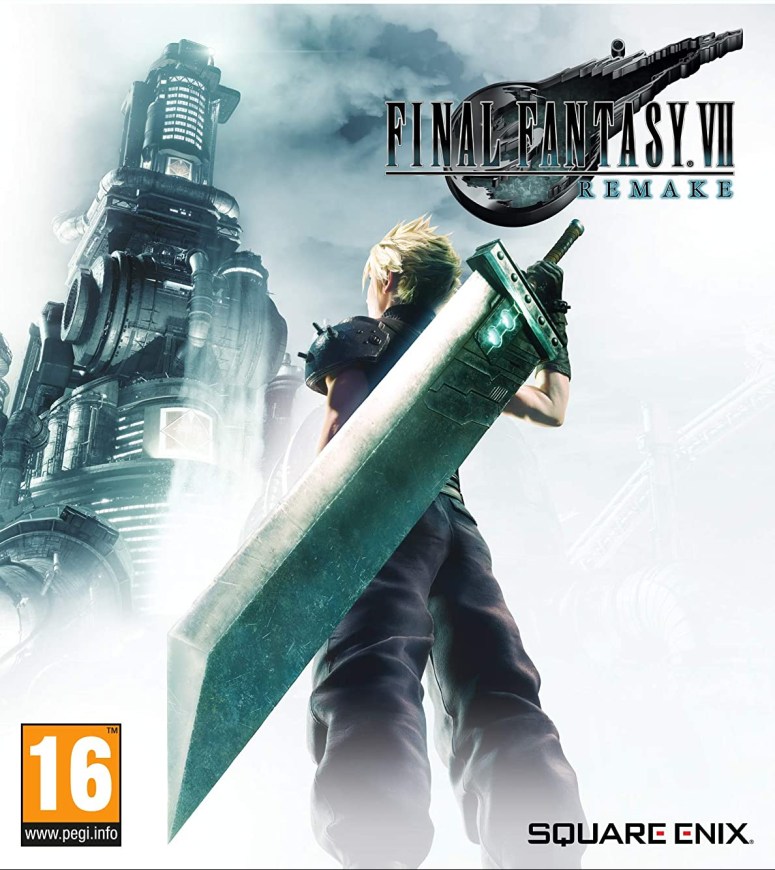
This award was open to all of my Patreon members to vote for the game of 2020 they thought was the best and with a grand total of 1 vote cast we have a winner. Despite the story doing a lot of dicking around this was how I saw a Final Fantasy VII remake being done. I’m just hoping that in the second part the story can be a bit more focused on the task at hand.

Indie game of the year:

I was originally going to give the award to Endzone, but after playing Hades I couldn’t not give it the award. The gameplay was well defined, the art style captivating and most importantly it was fun to play. Well done SuperGiant.

Honourable mentions go out to Endzone: A World Apart & Vigil: The Longest Night

the one that got away award:

Half-Life Alyx

This award is given to the game I most wanted to review but for one reason or another (usually financial) I never managed to review. The Half-Life series is one that has just done it for me, so learning that the next instalment was a VR exclusively was both exciting and upsetting in equal measures as there was no way I could justify spending hundreds of pounds just so I could play it. Maybe this time next year someone will be paying me to play games and tell people what I think… maybe.

game of the year:

I really enjoyed The Last of Us Part II. It was much improved from the first game and that was great in it’s own right too. The characters were deep and very well rounded. The environments and rendering are some of the best I’ve seen on the PS4. The mechanics and gameplay were tight, felt solid and tied together nicely. This also nicely makes The Last of Us Part II the first sequel of a previous Game of the Year to win Game of the Year. Congratulations Naughty Dog, It’s not likely for lightning to strike twice in the same place. If you manage it a third time I’m going to call shenanigans.

The Last of Us Part II (PS4)

Finally. A fat, juicy AAA title to sink my teeth into that wasn’t a reboot. Sure it is a sequel but that can be forgiven as it is a sequel to one of my previous Game of the Year winners. Let us re-join Joel & Ellie in their post-apocalypse fight for survival in The Last of Us Part II.

Just before you proceed, thought you ought to know There will Be Spoilers.

So we start the game with the ending of the previous game conveniently retold to us by Joel and the massacre he made of the Fireflies in order to save Ellie from being dissected in order to find a cure for the Cordyceps fungus pandemic. Fast forward 4 years later and the two have settled down to life in Jackson, Wyoming. During a scouting mission Joel and his brother Tommy rescue a survivor Abby from a hoard of infected. Abby takes the two back to Abby’s group who unknown to the brothers are remnants the Fireflies who ambush the brothers. Ellie finds Joel just in time to watch Abby beat Joel to death for killing her father, one of the surgeons who died in Joel’s massacre. Ellie swears revenge against Abby and sets out to Seattle in pursuit of Abby and her gang.

Now I like to think that someone somewhere at Naughty Dog read my review of The Last of Us and thought “Yes, we must fix those niggles for our next game”. I think this because that’s exactly what they did. Unlike the first game I really managed to get absorbed into the game and feel immersed into the world. The stealth aspect that felt as thought it was at times either too sensitive or not sensitive enough has been evened out too. The game looks and feels superior to it’s predecessor.

From the very onset of the game the visuals are absolutely stunning. The detail of the environment and the fluidity of the characters movements and facial expressions show that a lot of time and effort has been spent polishing the game to such a finish that even Rhianna would complement it’s shine. This enforces the immersive capabilities of the game. You can’t help but feel tense as you sneak up on an enemy as you hope to your preferred flavour of deity that the poor bastard doesn’t turn round.

The immersion is also helped by the depth of the characters in the game. You get a sense that these are real people, feeling real feelings and having real struggles. However, I failed to sympathise with either Ellie or Abby during the game. Ellie’s sole goal is Abby’s death because she killed Joel, but Joel did a shitty thing and kinda deserved what he got. On the other hand Abby did a particularly shitty thing in killing Joel so kinda deserves what’s coming for her. All my sympathy was spent on the horses having to stay out in the cold as long as they did and later on getting blown up and shot, despite the fact they never killed anyone (that we know of). This makes the message of cause and consequence in regards to revenge and taking a life that the game is so obviously wanting to portray somewhat weaker with each enemy Ellie makes new neck holes for.

So we have established that the combat is good (actually looking back I haven’t, btw the combat is good, done, moving on) and the story telling is good. However, the parts in between them are a bit of a slug-a-thon. These are the parts in films that are usually skipped over, like how you never see James Bond browsing through duty-free as he waits for his flight to be called to continue to where the rest of the plot is happening. Usually these parts consist of move in said direction for a while, except for the little open world bit where Ellie must roam the central district of Seattle looking for gasoline.

So if Naughty Dog are reading this (as we’ve already established, they are) recommendations I would like to make for The Last of Us Part III are in short: a) More open world explore and b) A bit less Ludo-narrative dissonance please. Aside from them just do more of the same please.